
Solar panel thermal inspections
Your solar panels are working. But are they safe, and can you prove it?
A thermal drone inspection finds the hot spots, failing cells and loose connections you can't see. You get documented proof your panels were checked, reported by a Category 1 Thermographer.
★★★★★ “We have been able to identify the bank of panels no longer producing.” Joe B., Westwood Energy Ltd Google review
Not sure you need one? Take the 60-second solar safety check
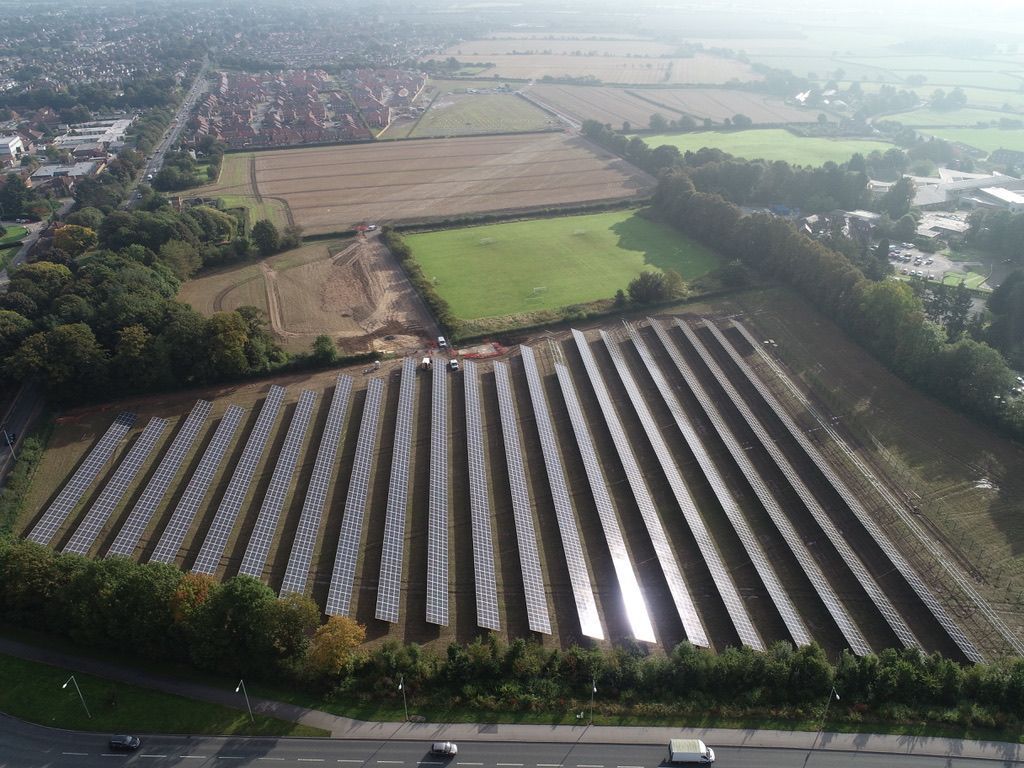
- CAA licensed
- Category 1 Thermographer
- Works to IEC TS 62446-3
- Results within 3 working days
- £10m public liability insurance
Why now
Solar fires are rising faster than installations
If you own, manage, insure or install commercial solar, that's a liability question you'll be asked.
212
solar panel fires in 2025
Up from 91 in 2022, a 133% rise.
49
caused by DC cables and connectors
The biggest single cause, and exactly what a thermal camera picks up.
88
spread beyond the panels
Up from 33 in 2022.
UK fire services attended these fires. Source: QBE Insurance, 2026, from FOI requests to UK fire and rescue services.
What you get
Documented proof your panels were checked
You get it before an insurer asks for paperwork you don't have. Your report includes:
- An executive summary: site, date, array size, condition rating and findings
- The conditions on the day, recorded as the standard requires: irradiance of at least 600 W/m², air temperature, wind and cloud
- The method: equipment, camera specification and flight details
- Every fault located by panel and string, with its type and temperature
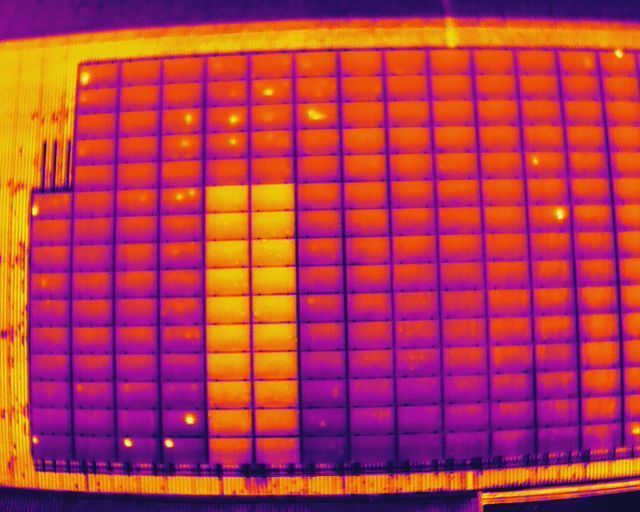
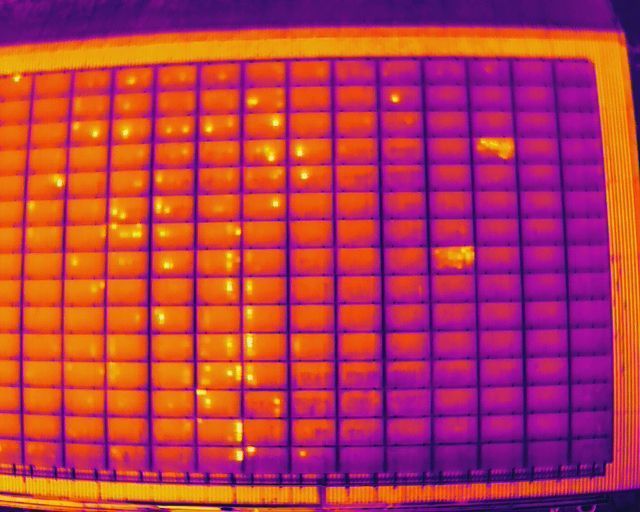
- Thermal images in the Iron Red scale, each paired with a high-resolution photo of the same panels
- Each defect graded from red to green
- Typical faults found: hot spots, bypass diode failures, cell defects and cracks, string faults, potential-induced degradation (PID), physical damage and soiling
- Ready for warranty claims, insurance submissions, planned maintenance, and due diligence before you buy a site
- Results within 3 working days of the flight
- Carried out to IEC TS 62446-3, the standard insurers, lenders, EPC contractors and warranty providers look for
Your report shows what's wrong and exactly where. Your solar engineer or contractor decides the fix.
What Richard finds
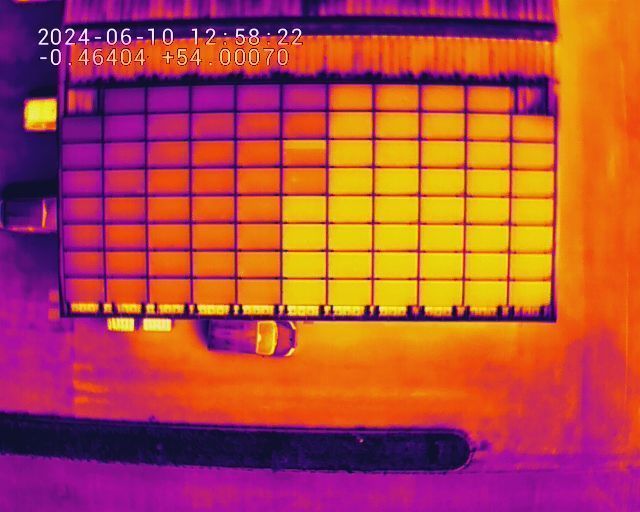
One roof, start to finish
From the drone to your report
The same homeowner's roof, three ways. This is how a fault you can't see becomes one you can point to.
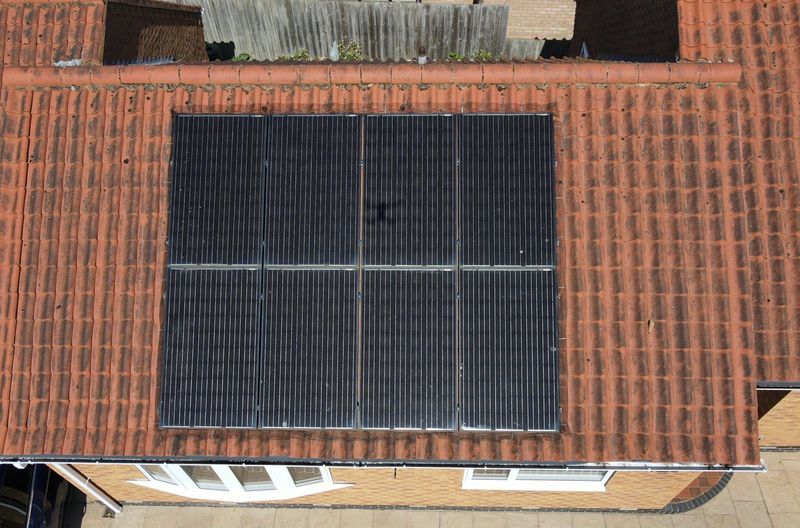
01 · The drone's camera
What you see
From the drone's ordinary camera, the panels look fine. Nothing here tells you anything is wrong.
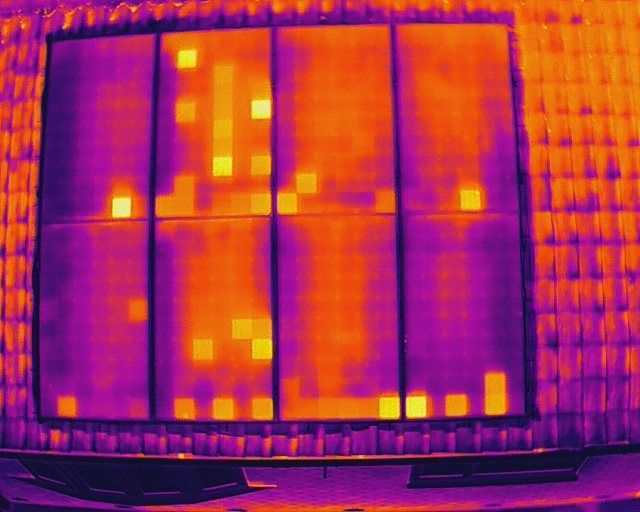
02 · The thermal camera
What the heat shows
The same panels in Iron Red. Each bright square is a cell running hotter than the cells around it.
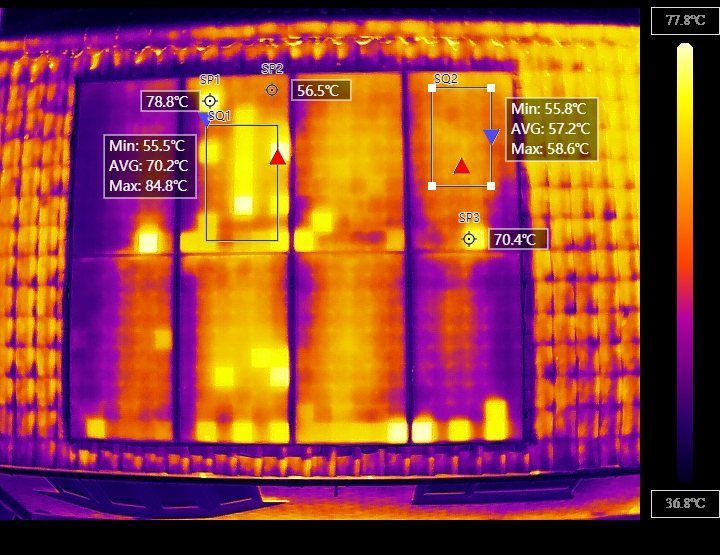
03 · Richard's analysis
What your report shows
Back at his desk, Richard measures and marks each hot spot, up to 84.8°C on this roof. That's the detail your engineer works from.
Shown with the homeowner's permission.
Built for the people who carry the risk
Building owners
Know your rooftop array is safe, and have the paperwork to show it.
Site and facilities managers
A fast, non-intrusive check with nobody on your roof.
Insurance brokers
An independent inspection record for your clients' solar risk.
Solar installers
Independent post-install and maintenance checks for your customers.
Solar farm operators
Find failing strings across a whole site in one flight.
From Scotland to the South West
Commercial rooftops, warehouses, factories and field arrays of any size.
Solar inspections from Crieff in Scotland to Bristol.
“With the help of Dee4Drones we have been able to identify the bank of panels no longer producing. This has allowed us to pinpoint an area for our search, drastically reducing costs to the customer.”
Four steps to your report, within 3 working days
- 1
Free consultation
Agree what you need documented.
- 2
Thermal flight
CAA licensed, flown in the right light and weather.
- 3
Expert analysis
Your images are reviewed by a Category 1 Thermographer.
- 4
Your report
It lands in your inbox within 3 working days.
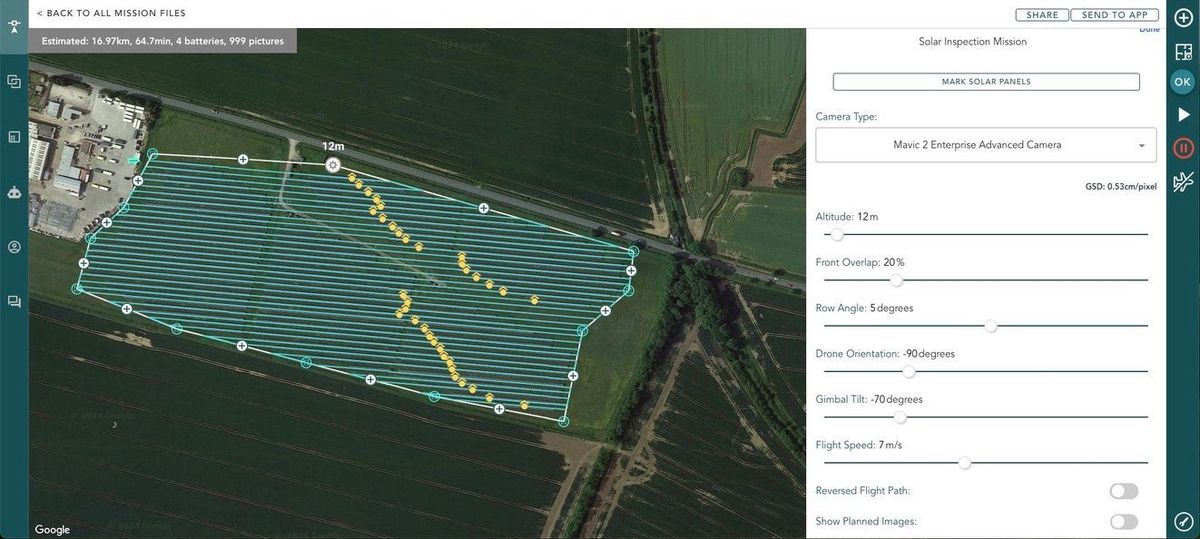
Also from Richard: thermal imaging surveys of buildings and plant, and drone roof inspections.
Prices are quoted per job: ask Richard.
Questions about solar inspections
What weather do you need?
Strong sunshine on the panels: at least 600 W/m², as the standard requires, with low wind and little cloud. Richard plans your flight around the forecast.
Is the report recognised by insurers?
Richard works to IEC TS 62446-3, the benchmark insurers, lenders, EPC contractors and warranty providers use. Check what your insurer needs, and Richard can talk them through the report.
Is it certified?
Richard is a Category 1 Thermographer, and you receive his report: documented proof your panels were checked.
How often should my panels be inspected?
Once a year. QBE Insurance recommends an annual inspection, and a check after extreme weather, and Richard agrees.
Does the system need switching off?
No. Nothing needs switching off. Your panels need strong sunshine and to have been working for a while, so faults show up. Your business carries on as normal.
What do the colours in the images mean?
Richard's images use the Iron Red scale. White and red are the hottest, then orange and yellow, down to blue and black at the coldest.
The fault is already there. You just can't see it yet.
Tell Richard what you need checked. You get a free call, a clear price and a plan for your site.
★★★★★ “We have been able to identify the bank of panels no longer producing.” Joe B., Westwood Energy Ltd Google review
Prefer to write? richard@dee4drones.co.uk
Want to read more first? Read the articles